
Yes, most U.S. remote workers can get Spain’s digital nomad visa — and the path is more straightforward than the paperwork pile suggests. You have two routes: apply at a Spanish consulate in the U.S. for a one-year visa, or enter Spain on your passport (Americans get 90 visa-free days in Schengen) and file directly with the UGE for a three-year residence permit. Here’s what to do right now:
- Check your eligibility documents (degree or three years of professional experience, three months of employment history with your foreign employer).
- Book your consulate appointment immediately if you’re applying from the U.S. — slots fill up weeks or months in advance.
- Or plan your Spain entry date if you’re going the UGE route, keeping your 90-day Schengen window in mind.
Table of Contents
- Do you qualify for Spain’s digital nomad visa?
- Which application route is right for you?
- What documents do you need to prepare?
- How long does it actually take, and what does it cost?
- What to do after approval: TIE, banking, and settling in Marbella
- Common rejection reasons and how to avoid them
- Key Takeaways
- Why the first 90 days in Marbella matter more than the visa itself
- Centro House Marbella: your base while the paperwork catches up
- Authoritative sources to verify before you file
Do you qualify for Spain’s digital nomad visa?
The eligibility rules are tighter than they look on paper, so run through this checklist before you book anything.
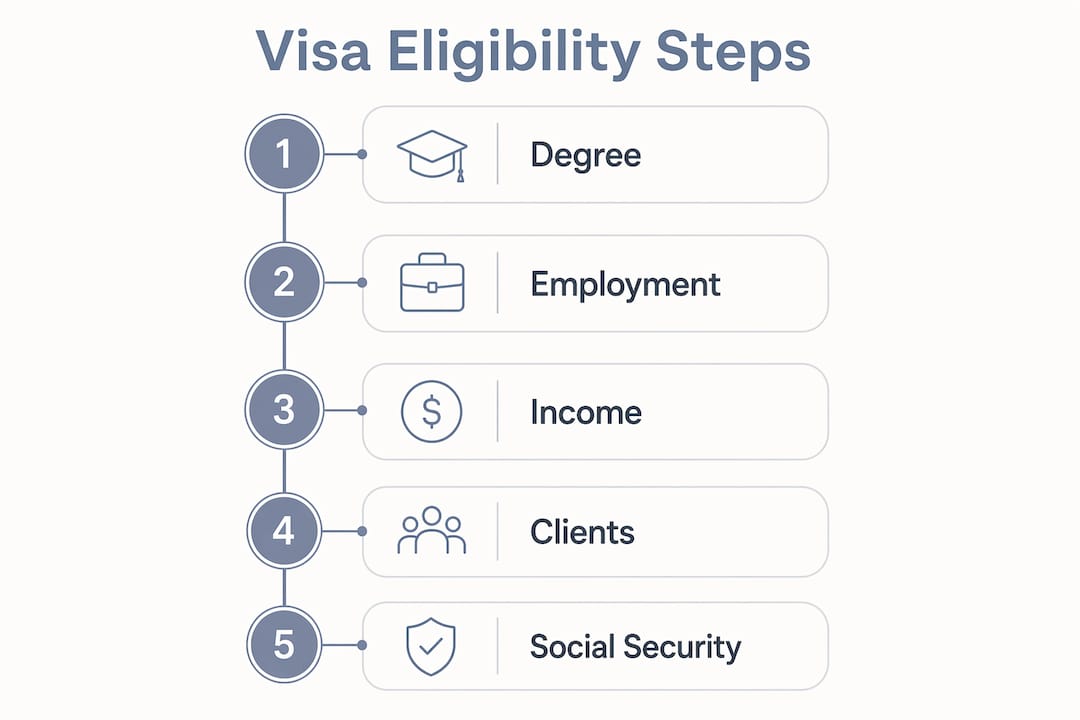
Education or experience: You need either an undergraduate or postgraduate degree from a recognized university or business school, or at least three years of professional experience in your current field. Both routes are equally valid — the degree just needs to be apostilled and translated.
Employment tenure: Whether you’re an employee or freelancer, you must show at least three months of working relationship with your foreign employer or clients before filing. A company letter confirming remote work permission and your start date covers this for employees.
Income floor: Your earnings must hit at least 200% of Spain’s Minimum Interprofessional Wage (SMI). The 2026 SMI sits at €1,221/month (paid over 14 months), putting the threshold around €2,850/month gross for the main applicant. The SMI adjusts annually, so verify the live figure before you submit.

Client geography for freelancers: Spanish-sourced work is capped at 20% of your total activity. If most of your clients are already in the U.S. or elsewhere outside Spain, you’re fine.
Social security: Your company must register with Spanish Social Security, or you register with RETA (the self-employed regime), or you present an A1/bilateral certificate if the U.S.-Spain social security agreement covers your situation.
Pro Tip: Passive income — dividends, rental returns — does not count toward the active-work requirement. Spain wants to see you actually working remotely for foreign clients, not just collecting returns.
Which application route is right for you?
Two routes, very different timelines. Pick based on whether you can travel to Spain now.
| Consular route | UGE route | |
|---|---|---|
| Where you apply | Spanish consulate in your U.S. jurisdiction | Inside Spain (electronically, via UGE) |
| Permit length | Up to 1 year | — |
| Processing time | Several weeks (varies by consulate) | ~16–18 working days |
| Who it suits | Can’t travel to Spain yet | Can enter Spain on Schengen allowance now |
| Positive silence rule | No equivalent | After 20 working days, silence = approval |
The UGE route resolves in roughly 16–18 working days and carries a built-in safety net: if the UGE doesn’t respond within 20 working days, positive administrative silence applies and your application is legally treated as approved. That’s a meaningful backstop. The consular route takes longer and gives you a shorter initial permit, but it’s your only option if you need to stay stateside while processing.
Decision rule: If you can fly to Spain and file while your Schengen days are still valid, the UGE route is almost always the faster and more strategic choice. If you’re tied to the U.S. for the next few months, go consular and book that appointment today.
What documents do you need to prepare?
Pull these together early. The apostille and sworn-translation steps are where most timelines blow up.
- Passport with at least one year of validity and two blank pages; plus a recent passport-size color photo.
- Visa application form (national visa form for the consular route) or MI-T form for the UGE route.
- NIE (Número de Identidad de Extranjero): required before or alongside your visa application at most U.S. consulates.
- Proof of employment or freelance activity: employer letter confirming remote work permission, contract length, and your salary; or client contracts plus three months of invoices and matching bank statements.
- Degree certificate OR experience documentation: apostilled and sworn-translated. For experience, a detailed employment history works.
- Criminal record certificate(s) from every country you’ve lived in over the past five years, issued within six months of filing, apostilled, and translated.
- Private health insurance accepted in Spain — full coverage, no co-pays or deductibles, covering preventive, diagnostic, treatment, and rehabilitation care.
- Social security proof: company registration with Spanish Social Security, RETA certificate (self-employed), or an A1/bilateral agreement certificate.
- Company registry certificate showing your employer’s incorporation date and business type, proving at least one year of continuous activity.
Every foreign public document needs a Hague Apostille first, then a sworn translation by a Traductor Jurado recognized by Spain. Generic translations get rejected. Full stop.
Pro Tip: Align the income figures across every document — contract salary, payslips, and bank statements must match. Inconsistencies are the single most common rejection trigger.
How long does it actually take, and what does it cost?
| Step | Timeline | Approximate cost |
|---|---|---|
| Apostille (U.S. documents) | 1–3 weeks depending on state | Varies by state |
| Sworn translation | 1–2 weeks per document | Varies by translator |
| Consulate appointment | Book weeks to months ahead | — |
| Consular visa processing | Several weeks after submission | ~€80 (varies by nationality) |
| UGE permit processing | ~16–18 working days | ~€74 (Modelo 790) |
| NIE/TIE fees | Paid at appointment | ~€16 each |
Consulate appointments book out weeks or months in advance — this is the single biggest scheduling risk for U.S. applicants. Secure your slot before you finalize translations. Then work backward: apostille first, sworn translation second, insurance and social security proof third.
If you’re going the UGE route, map your Schengen entry date carefully. You have 90 days in a 180-day period without a visa, and you want to file the UGE application well before that window closes.
What to do after approval: TIE, banking, and settling in Marbella
Authorization in hand? Great. Now the real to-do list starts.
Get your TIE immediately. The Foreigner Identity Card (TIE) is required for signing leases, opening a local bank account, and accessing municipal services. Book the TIE appointment as soon as your authorization is confirmed. Bring your authorization document, passport, completed EX-17 form, and the tasa (fee) payment receipt.
Register with your local ayuntamiento (town hall). The padrón municipal registration is how you officially exist in Spain for local services. In Marbella, this is a quick in-person visit.
Open a bank account. Most Spanish banks want your NIE and TIE, plus proof of address. Some digital banks (like Wise or Revolut) are easier to open before your TIE arrives and work well for day-to-day spending while you wait.
Sort your internet and workspace. Marbella has solid fiber coverage, but having a reliable, professional workspace during the first 90 days of paperwork chaos is worth its weight in gold. Coworking in Marbella gives you a fixed address for mail, fast internet, and meeting rooms for client calls across time zones — all while your apartment hunt is still in progress.
Pro Tip: Planning travel rewards for longer stays? A solid nomad travel rewards strategy can offset flights and accommodation costs significantly during the first months.
Common rejection reasons and how to avoid them
Most rejections are preventable. Here’s where applicants go wrong:
- Inconsistent income figures across contract, payslips, and bank statements. Fix: get an employer letter that explicitly states your salary and matches every other document.
- Non-apostilled documents or generic translations. Fix: apostille every public document, then use a Traductor Jurado. No exceptions.
- Health insurance with co-pays or coverage gaps. Fix: read the policy fine print. Spain requires full coverage equivalent to the national health system.
- Social security confusion. Fix: if you’re unsure whether a U.S.-Spain bilateral agreement covers you, get professional advice early. This is the most misunderstood requirement and a frequent rejection cause.
- Insufficient proof of non-Spanish client work for freelancers. Fix: include contracts, invoices, and bank transfers from foreign clients that clearly show the 80%+ foreign-income split.
- Applying too late for a consulate appointment. Fix: book the slot first, then finalize your documents around it.
Pro Tip: If your social security or bilateral agreement status is genuinely unclear, hire a Spanish immigration lawyer for that one piece. It’s cheaper than a rejection and a second application cycle.
Key Takeaways
Spain’s digital nomad visa is genuinely accessible for U.S. remote workers who earn above the SMI threshold and have three months of documented work history — the UGE route is faster and gives a longer initial permit for those who can travel to Spain now.
| Point | Details |
|---|---|
| Two routes available | Consular (1-year visa, applied in the U.S.) or UGE (up to 3-year permit applied inside Spain). |
| UGE is faster | The UGE resolves in ~16–18 working days; positive administrative silence applies after a few weeks. |
| Income floor | You need roughly €2,850/month gross (200% of the 2026 SMI of €1,221/month); verify the live figure before filing. |
| Book appointments early | Consulate slots fill weeks to months ahead — this is the single biggest scheduling bottleneck. |
| Centro for arrival | Centro House Marbella offers flexible coworking, private offices, and on-site accommodation to bridge the gap while your TIE and lease come through. |
Why the first 90 days in Marbella matter more than the visa itself
Here’s an opinion you won’t find in most visa guides: the visa is the easy part. What actually determines whether your Spain move works is what happens in the first three months after approval.
Most nomads underestimate how much administrative friction compounds during the settlement window. You’re chasing a TIE appointment, hunting for a lease (which requires the TIE you don’t have yet), opening a bank account (which requires the lease you can’t sign), and trying to keep client work moving through all of it. It’s a circular problem that’s genuinely stressful without a fixed base.
The nomads who navigate this smoothly tend to have one thing in common: a professional workspace with a real address, reliable internet, and people around them who’ve already solved the same problems. That’s not a luxury — it’s a practical tool. A Marbella coworking setup gives you mail handling, meeting rooms for client calls, and a community of people who know which bank is easiest to open without a TIE and which rental agent actually responds. The wellness side — gym, pool, yoga classes — isn’t a nice extra either. It’s what keeps you functional when the bureaucracy is doing its worst.
Centro House Marbella: your base while the paperwork catches up
Waiting on your TIE? Still hunting for a long-term lease? Centro House is built for exactly this window. It’s recognized as Best Office in Spain by the European Property Awards, and 70% of members report improved health while 68% report better concentration — numbers that matter when you’re juggling visa admin and client deadlines simultaneously.
Hot desks, fixed desks, private offices for 2–9 people, and meeting rooms bookable by the hour give you flexibility without a long-term commitment. On-site executive accommodation means you don’t need a permanent address to get started. Fast fiber internet, wellness classes, and a community of entrepreneurs and nomads who’ve been through the same process make the first months feel a lot less like a bureaucratic obstacle course. Check availability and pricing and book your first visit — your future self, mid-TIE-appointment panic, will thank you.
Authoritative sources to verify before you file
Figures like the SMI income floor and consular fees change. Always confirm current numbers directly with official sources before submitting.
| Source | What to verify |
|---|---|
| UGE / inclusion.gob.es | UGE application forms, processing rules, positive silence rule |
| exteriores.gob.es (Washington consulate) | U.S.-specific consular requirements and jurisdiction |
| exteriores.gob.es (Houston consulate) | South-central U.S. applicants; mailing submission details |
| Plataforma One (one.gob.es) | Official procedure overview and document checklist |
| Nomad Almanac | Step-by-step procedural guide and current SMI figures |
| LegalClarity | TIE requirements and practical post-approval steps |
This article is general information, not legal or immigration advice. Confirm current requirements, fees, and income thresholds with the relevant Spanish consulate or a qualified immigration professional before filing.